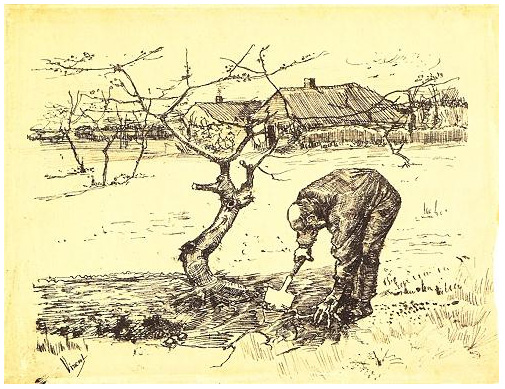
C.S. Lewis on contraception (and bulimia)

The following is an excerpt from C.S. Lewis’s The Pilgrim’s Regress. The quote is from the mouth of Mr. Sensible, a sort of worldly sensualist who likes discussion but dislikes following logic to its conclusions, so, like the Screwtape Letters, we are meant to take the truth as the opposite.

Note how he equates the bulimia or bingeing-and-purging of the Romans with contraception, “praising” both for their ability to extract natural consequences from a pleasurable act.

C.S. Lewis was not a Catholic, and I wonder if he would have held the same views today, where the common cultural heritage against contraception has eroded so much within Protestantism since the 1930’s. But then, perhaps he would have. He was keen at seeing through to the root issues of culture, and he had a devout Catholic for a friend and fellow Inkling.

The bees have stings, but we rob them of their honey. To hold all that urgent sweetness to our lips in the cup of one perfect moment, missing no faintest ingredient in the flavour of its μονόχρονος ἡδονή [one-time pleasure]], yet ourselves, in a sense, unmoved–this is the true art. … Is it an audacity to hint that for the corrected palate the taste of the draught even owes its last sweetness to the knowledge that we have wrested it from an unwilling source? To cut off pleasures from the consequences and conditions which they have by nature, detaching, as it were, the precious phrase from its irrelevant context, is what distinguishes the man from the brute and the citizen from the savage. I cannot join with those moralists who inveigh against the Roman emetics in their banquets: still less with those who would forbid the even more beneficent contraceptive devices of our later times. That man who can eat as taste, not nature, prompts him and yet fear no aching belly, or who can indulge in Venus and fear no impertinent bastard, is a civilized man.

Possible gods and goddesses

It is a serious thing, to live in a society of possible gods and goddesses, to remember that the dullest and most uninteresting person you talk to may one day be a creature which, if you saw it now, you would be strongly tempted to worship, or else a horror and a corruption such as you now meet, if at all, only in a nightmare. All day long we are, in some degree, helping each other to one or another of those destinations. (pg. 15)

– C.S. Lewis, The Weight of Glory

Priestesses in the Church? Yes, Mr. Lewis, and bishops too!

This essay entitled “Priestesses in the Church?” by C.S. Lewis really floored me when I first read it a few years ago, so much that, of the essays in God in the Docks, perhaps it was the most memorable. It is particularly relevant today. Libby Lane was ordained today as the first female bishop of the Church of England. I imagine that Lewis would be quite disappointed, although perhaps not surprised, that the ordination of priestesses which he called in his day “unlikely to be seriously considered by the authorities” has not only been considered, but effected, and not only for priestesses, but now for bishops. This trend toward the ordination of women is pervasive in may denominations including the United Methodist, Episcopal, and (even prior to this date) greater Anglican traditions. In fact it is even encouraged among the Brethren in Christ, a brethren or holiness denomination based in Pennsylvania of which my wife’s family are committed members.

Googling the essay produces a very sad assortment of blog rebuttals of the essay which do not understand Lewis’ points and really make fools of themselves blabbering on at straw men. Therefore, although you should really just read the essay itself, I will try to do him some brief justice here. Lewis’ argument could be syllogized this way:

  • Major Premise: A key role of a priest is to represent God to man.
  • Minor Premise: God has revealed himself to mankind as masculine.
  • Conclusion: Therefore, a priest must represent God masculinely.
  • Second Major Premise: a person’s gender is part of their spirituality, it is a “living and semitive figure which God has painted on the canvas of our nature”.
  • Second Minor Premise: Men are masculine.
  • Conclusion: Therefore, a man  must represent God to mankind.

I find that the only point that one can bail on this train of logic is at the very beginning–one must deny the mystical, representative nature of the sacerdotal office. Protestant denominations that do so, incidentally may have more of an excuse to allow women as “pastors” but this represents a deficiency in their whole Christian system. The fact that they may allow women to fulfill their version of the priestly office reveals that they have no priestly office at all. And I would submit that churches whose leaders merely educate and administrate and visit the sick are missing something of what Christianity truly is. But that is another issue. For churches who acknowledge the mystical role of the priest in the sacramental economy, and who hold the view that the Bible’s consistently masculine imagery for God was not an oversight on his part (R.I.P., TNIV translators), the ordination of female priests and bishops is a perversion of Christianity in the name of that great insidious god of our times, common sense.

Far too easily pleased

C.S. Lewis’s famous passage in The Weight of Glory bears repeating in this blog:

If we consider the unblushing promises of reward and the staggering nature of the rewards promised in the Gospels, it would seem that Our Lord finds our desires not too strong, but too weak. We are half-hearted creatures, fooling about with drink and sex and ambition when infinite joy is offered us, like an ignorant child who wants to go on making mud pies in a slum because he cannot imagine what is meant by the offer of a holiday at the sea. We are far too easily pleased. (26)

God let me find by faith such joys in your right hand that I will release all others.


http://www.desiringgod.org/blog/posts/we-are-far-too-easily-pleased

What are we to make of Jesus Christ?

What are we to make of Jesus Christ? C.S. Lewis responds to a question with a brilliant exposition of his and others’ “lunatic, liar, or lord” logic.


If this essay doesn’t either make you flushed with joy at the wonder of Jesus Christ or angry that his presumptuous insanity ever became the world’s largest religion, I don’t know what response is left to you. May we deal rightly with Jesus. It is the most important thing we will ever do.

If you want to read the article instead of listening to it, here is a PDF.

C.S. Lewis on a “Christian Political Party”


I came across this essay, “Meditation on the Third Commandment”, by C.S. Lewis, while reading God in the Dock, a collection of his lesser-known writings. He brings in a reminder not to believe that the Kingdom of God will be achieved by political means. His essay is expressed in terms of the 1940’s political situation in England, but it is remarkably relevant to the United States in the twenty-first century. In this historically “Christian country”, it is easy to over-associate our political and social beliefs with our religious beliefs, to get caught thinking (or at least feeling), “If only this law would be passed, if only this political party would succeed, then our country would get right with God again.” But to do so is to run the risk of breaking the Third Commandment.

“You shall not misuse the name of the Lord your God” (Exodus 20:7)

We must not attach the name of the Lord to anything man-made. The Kingdom that Jesus preached was decidedly unpolitical (“render unto Caesar what is Caesar’s”), despite the longings of Israel for political deliverance from the Romans. Although we must maintain strong hope and desire that the power of God will influence all layers of culture, including our government, we should take care not to expect that His power will manifest itself as a particular human-level institution or political platform. C.S. Lewis says it much better than I can, so I highly recommend reading this article, bearing in mind that a little cultural transposition is necessary.

“Meditation on the Third Commandment”
(C.S. Lewis, 1941)


Originality

“Even in literature and art, no man who bothers about originality will ever be original: whereas if you simply try to tell the truth (without caring twopence how often it has been told before) you will, nine times out of ten, become original without ever having noticed it.”
– C. S. Lewis

Pictures of how God relates to us

(cf. the categories in the last post, by C.S. Lewis)
1. Tree and Gardener

Blessed is the man who walks not in the counsel of the wicked, nor stands in the way of sinners, nor sits in the seat of scoffers; but his delight is in the law of the LORD, and on his law he meditates day and night. He is like a tree planted by streams of water that yields its fruit in its season, and its leaf does not wither. In all that he does, he prospers. (Psalm 1:1-3)
The Lord tends us, gives us fertilizer, prunes our bad spots, nourishes us, and cultivates us to yield fruit pleasing to him. 
2. Potter and Clay

But who are you, O man, to answer back to God? Will what is molded say to its molder, “Why have you made me like this?” Has the potter no right over the clay, to make out of the same lump one vessel for honorable use and another for dishonorable use? (Romans 9:20-21)

The Lord molds us, shapes us. We are his workmanship (Ephesians 2:10). He makes us for his uses, and our glory consists in our serving of his purposes and ornamenting his glory.

3. Shepherd and Sheep

All we like sheep have gone astray; we have turned—every one—to his own way; and the LORD has laid on him the iniquity of us all. (Isaiah 53:6)

But we your people, the sheep of your pasture, will give thanks to you forever; from generation to generation we will recount your praise. (Psalm 79:13)

We are as dumb as sheep, and as vulnerable to predators. The Lord is our keeper and protector; he preserves our life, and our life in turn benefits him as the flock benefits the shepherd (because he has graciously chosen to make it so, even though he has no ultimate need of us, or any of his creation). The sheep develop a trust relationship with the shepherd (albeit quite one-sided, which also compares to us and God).

4. Father and Child

As a father shows compassion to his children, so the LORD shows compassion to those who fear him. (Psalm 103:13)

Pray then like this: “Our Father in heaven, hallowed be your name.” (Matthew 6:9)

Fathers are both authority and love – they are tender with their children, expressing love that penetrates perhaps deeper than any other into the heart of a child. They also discipline them. Why do they discipline? Also because of a love motivation: they see a vision for the kind of adults they want their children to grow into, and they discipline them in order to create in them the necessary virtues and character.  God does the same for us.

5. Husband and Wife

“And in that day, declares the LORD, you will call me ‘My Husband,’ and no longer will you call me ‘My Baal.’ For I will remove the names of the Baals from her mouth, and they shall be remembered by name no more. …And I will betroth you to me forever. I will betroth you to me in righteousness and in justice, in steadfast love and in mercy. I will betroth you to me in faithfulness. And you shall know the LORD. (Hosea 2:16-20)

The Lord has prepared an intimacy of union with him, which romantic love between man and woman was made to echo. We are to love and be loved for all eternity by the bridegroom, Jesus Christ, and the Great City of his people will be the bride. God refers to our love for him in romantic terms, and our abandonment of him in terms of adultery.
_________________________

These and many other images are just the shadows of the one true Ultimate Relationship that we were made to enter into (Colossians 2:17). If you were to put these images on a graph with a myriad other comparisons in the created world, they would all be lines pointing in the same direction, illuminating the various facets of that glorious epicenter of purpose for which mankind was created – to relate to the Existing One, YHWH, in such a way that we both glorify and enjoy him forever. Take us up, O Lord, into the reality which all of these  images are whispering to us.

The intolerable compliment

[Largely plagiarized summary of select portions of the third chapter of C.S. Lewis’ The Problem of Pain.]

How can we define the goodness of God? One one hand, his ways are higher than ours, and what we call good might be bad, and vice versa. On the other hand, our concept of good must not be entirely off.

“If He is not (in our sense) ‘good’, we shall obey, if at all, only through fear–and should be equally ready to obey an omnipotent Fiend. The doctrine of Total Depravity–when the consequence is drawn that, since we are totally depraved, our idea of good is worth simply nothing–may thus turn Christianity into a form of devil-worship.”

 The fascinating middle ground is that, although we have an imperfect understanding of God’s good, it is not ever confused with bad. In fact, men are (many of them) in a process of gradually discovering good, and as they do, they know immediately that the new law they encounter is good and real, and they feel a sense of guilt at not complying to it. The example is of an adopted child pulled off the streets, who gradually learns his manners, but recognizes them as superior to his former ways, with the humble sense that he has “blundered into society he is unfit for.” In this sense, God’s goodness is different that ours, but as the Platonic form differs from the physical object, or as a child’s scribbled circle differs from the perfect circle he has in his head. Even in the discrepancy, the superior standard is affirmed.

So how can we describe good in the ultimate, divine, “ideal” sense? When we say God is good, we mean that he is loving, and that is true. But by saying that he is loving, we mean he is “kind” and that he wants our happiness at all cost, like a benevolent and somewhat senile grandfather. And that is a poor definition of love. Kindness is not good when separated from the other virtues. “It consents very readily to the removal of its object” (e.g. the euthanasia of an animal). Furthermore, parents who are so kind to their children that they will not cause them pain raise the worst brats and in spoiling them, ruin their character. There is more to love than kindness. So what is God’s love like, then?

We are given in Scripture various modes, of varying analogous depth, which capture aspects of the unfathomable depths of God’s love for us, and thus his goodness as we may know it.

Artist and artifact
We are God’s workmanship. The sculptor or painter who loves his masterpiece, his life’s work, works with it, and will not be satisfied until it has achieved a certain character. In a sense, God is likewise not content with us until we have achieved a certain character.

Man and beast
We are his people and the sheep of his pasture. The owner of a dog tames the dog primarily for his own sake, that he may love it (not that the dog may love him); yet, the man’s interests in the dog are the dog’s best interests. The man is not content with a mangy, smelly, unruly mutt – he trains the dog’s behavior and cleans it to make it more lovable. Although to the dog, this process would seem quite unagreeable, the tamed dog achieves the healthiest, longest life, with the most comforts, and the noblest sense of self and loyalty. (In vague analogy, borrowing from the end of the book, a dog truly lives in his master as we truly live in God – reaching our potential and purpose when rightly submitted to our master.)

Father and son
God is our father, and we his children. This symbol means essentially an authoritative love on one side, with an obedient love on the other. Familial affection is mixed with a sense of submission, duty, which produces a relationship engendering a strong sense of honor and rightness in most men, when it is observed among them.

“The father uses his authority to make the son into the sort of human being he, rightly, and in his superior wisdom, wants him to be. Even in our own days, though a man might say it, he cold mean nothing by saying, “I love my son but don’t care how great a blackguard he is provided he has a good time.”

Man and woman
We are the bride of Christ. In this symbol we see that true love demands the perfecting of its object.

When we fall in love with a woman, do we cease to care whether she is clean or dirty, fair or foul/ Do we not rather then first begin to care? Does any woman regard it as a sign of love in a man that he neither knows nor cares how she is looking? Love may, indeed, love the beloved when her beauty is lost: but not because it is lost. Love may forgive all infirmities and love in spite of them: but Love cannot cease to will their removal. 

God’s love contains the kernels of all these earthly loves, and far surpasses them. Ultimately, God loves us more than we want to be loved. We would like a mild, emasculated, wimpy bit of love, love that either made us the center of everything, or else left us alone. But a look at the world can see that this is a contemptible perversion of love – witnessed either in those who are too fearful and self-centered to love courageously, or those that excessively dote upon the object of their love. I am afraid God loves us more truly and fervently than we would like.

When Christianity says that god loves man, it means that God loves man: not that He has some ‘disinterested’ because really indifferent, concern for our welfare, but that, in aweful and surprising truth, we are the objects of His love. You asked for a loving God: you have one. the great spirit you so lightly invoked, the ‘lord of terrible aspect’, is present: not a senile benevolence that drowsily wishes you to be happy in your own way, not the cold philanthropy of a conscientious magistrate, nor the care of a host who feels responsible for the comfort of his guests, but the consuming fire Himself, the Love that made the worlds, persistent as the artists’s love for his work and despotic as a man’s love for a dog, provident and venerable as a father’s love for a child, jealous, inexorable, exacting as love between the sexes.

 God loves us more than we would like. Praise be to Him. 

“Divine freedom”

Perhaps this is not the “best of all possible” universes, but the only possible one. Possible worlds can mean only “worlds that God could have made, but didn’t.” The idea of that which God “could have” done involves a too anthropomorphic conception of God’s freedom. Whatever human freedom means, Divine freedom cannot mean indeterminacy between alternatives and choice of one of them. Perfect goodness can never debate about the end to be obtained, and perfect wisdom cannot debate about the means most suited to achieve it. The freedom of God consists in the fact that no cause other than Himself produces His acts and no external obstacle impedes them–that His own goodness is the root from which they all grow and His own omnipotence the air in which they all flower (Excerpt from C.S. Lewis, The Problem of Pain, second chapter).

“I am that I am” (Ex 3:14).

“See now that I, I am He, And there is no god besides Me” (Deut. 32:39).

Not only is there no other god beside him; there is also no other possible universe beside that which he rules, no other possible existence beyond him, no other meaning of good. He is what is.